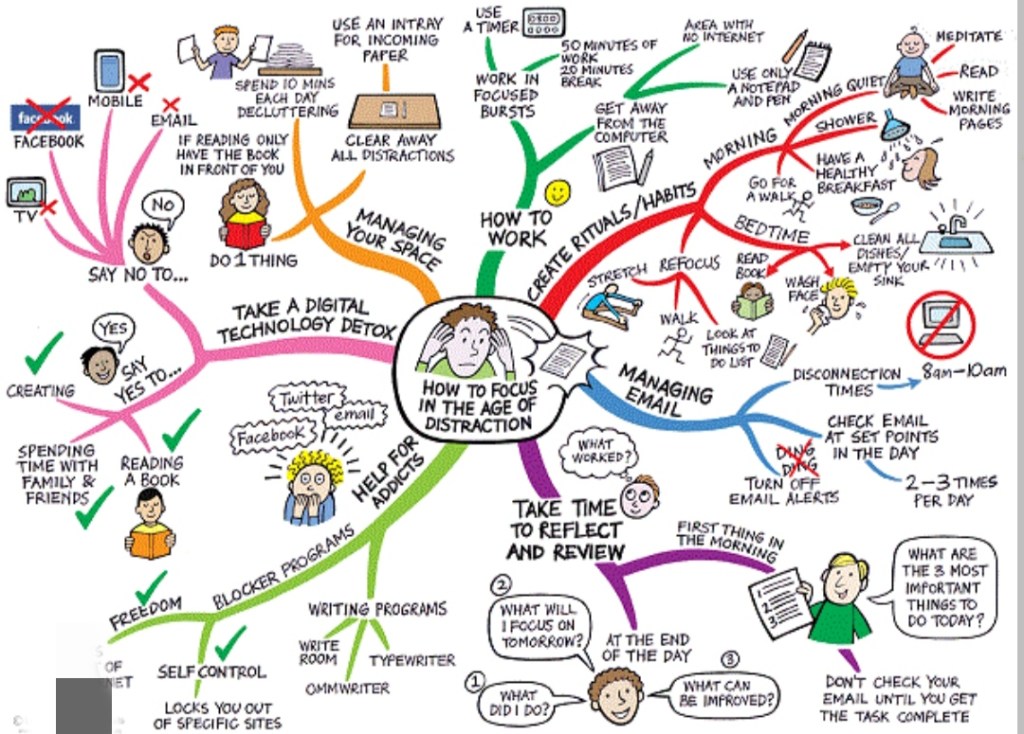
Introduction:
- Briefly introduce the concept of digital distractions and their prevalence in today’s society.
- Highlight the psychological impact of constant digital connectivity and its implications on productivity and well-being.
Section 1: Understanding Digital Distractions:
- Explore the psychology behind why digital devices are so captivating and addictive.
- Discuss the role of dopamine and the brain’s reward system in reinforcing digital engagement.
- Mention the FOMO (Fear of Missing Out) phenomenon and its psychological effects.
Section 2: Impact on Cognitive Functioning:
- Examine how digital distractions can affect concentration, memory, and critical thinking.
- Discuss research on the “switching cost” – the mental effort required to switch between tasks due to constant notifications.
Section 3: Psychological Strategies for Managing Digital Distractions:
- Introduce techniques from cognitive psychology, such as the Pomodoro Technique, to enhance focus and productivity.
- Explore mindfulness practices and their ability to reduce impulsive digital behavior.
- Discuss the importance of setting clear goals and boundaries for device usage.
Section 4: Social and Emotional Impact:
- Address how excessive digital distractions can impact relationships and social interactions.
- Highlight the potential for decreased empathy and communication skills due to screen-mediated interactions.
Section 5: Addressing the Addiction:
- Discuss the concept of digital addiction and its similarities to other forms of behavioral addiction.
- Mention the importance of seeking professional help if digital distractions become uncontrollable.
Section 6: Creating a Healthy Digital Lifestyle:
- Provide practical tips for creating a balanced relationship with digital devices.
- Encourage readers to disconnect during designated periods to promote mental well-being.
Conclusion:
- Summarize the key takeaways from the article.
- Emphasize the importance of self-awareness and proactive management of digital distractions.
- Conclude with a call to action for readers to implement the discussed strategies and share their experiences.
Remember, this is just an outline to get you started. You can expand upon each section by including relevant research findings, real-life examples, and practical tips. Feel free to modify the outline according to your preferences and the length of the article you’re aiming for. Good luck with your writing!
Title: Managing Digital Distractions: Psychological Insights for Modern Day
Introduction:
- Briefly introduce the concept of digital distractions and their prevalence in today’s society.
- Highlight the psychological impact of constant digital connectivity and its implications on productivity and well-being.
Section 1: Understanding Digital Distractions:
- Explore the psychology behind why digital devices are so captivating and addictive.
- Discuss the role of dopamine and the brain’s reward system in reinforcing digital engagement.
- Mention the FOMO (Fear of Missing Out) phenomenon and its psychological effects.
Section 2: Impact on Cognitive Functioning:
- Examine how digital distractions can affect concentration, memory, and critical thinking.
- Discuss research on the “switching cost” – the mental effort required to switch between tasks due to constant notifications.
Section 3: Psychological Strategies for Managing Digital Distractions:
- Introduce techniques from cognitive psychology, such as the Pomodoro Technique, to enhance focus and productivity.
- Explore mindfulness practices and their ability to reduce impulsive digital behavior.
- Discuss the importance of setting clear goals and boundaries for device usage.
Section 4: Social and Emotional Impact:
- Address how excessive digital distractions can impact relationships and social interactions.
- Highlight the potential for decreased empathy and communication skills due to screen-mediated interactions.
Section 5: Addressing the Addiction:
- Discuss the concept of digital addiction and its similarities to other forms of behavioral addiction.
- Mention the importance of seeking professional help if digital distractions become uncontrollable.
Section 6: Creating a Healthy Digital Lifestyle:
- Provide practical tips for creating a balanced relationship with digital devices.
- Encourage readers to disconnect during designated periods to promote mental well-being.

Conclusion:
- Summarize the key takeaways from the article.
- Emphasize the importance of self-awareness and proactive management of digital distractions.
- Conclude with a call to action for readers to implement the discussed strategies and share their experiences.
Remember, this is just an outline to get you started. You can expand upon each section by including relevant research findings, real-life examples, and practical tips. Feel free to modify the outline according to your preferences and the length of the article you’re aiming for. Good luck with your writing!
By Anzar showkat
 "Phenomenal Article$ ”